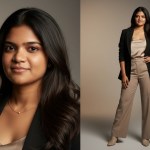
Lighting defines emotion. In both photography and AI art, the way light interacts with a subject determines whether an image feels calm, dramatic, or alive. The Cinematic AI Portrait Prompt — Golden Glow and Green Light Harmony captures this emotional depth through a dual-tone approach — combining warm, radiant gold with cool, balanced green.
In this guide, you’ll understand what this lighting concept means, why it’s become a favorite among AI artists, and how you can recreate it step by step. You’ll also get the exact AI prompt that produces this cinematic look and learn how to fine-tune it for your own creative goals.
Understanding Cinematic AI Portrait Prompt — Golden Glow and Green Light Harmony
A cinematic AI portrait focuses on storytelling through light and mood rather than simple realism. The Golden Glow and Green Light Harmony setup uses a blend of two contrasting tones:
- Golden Glow: A warm, backlit hue that mimics sunset lighting and adds softness to skin tones.
- Green Light Accent: A subtle, cool tone that balances warmth, adding visual tension and depth.
Together, they create a natural yet stylized balance similar to professional film lighting. The golden light evokes life and comfort; the green introduces mystery and mood. When used in AI portrait generation, this harmony helps produce a photo that feels both lifelike and cinematic — as though captured through a movie lens.
Why This Cinematic Lighting Matters
AI image generation thrives on subtle direction. Lighting choices determine how an algorithm interprets emotion and realism. The Golden Glow and Green Light Harmony approach matters because:
- It adds narrative weight: Viewers instantly feel the duality of warmth and contrast.
- It highlights detail: Golden tones enhance facial structure while green adds dimensional shadows.
- It mimics film aesthetics: Many blockbuster scenes use this complementary color scheme for dramatic tension.
For creators, mastering this style means producing portraits that feel premium — realistic yet artistically stylized.
Before and After — Real-World Transformations
Below is a conceptual comparison to illustrate what this lighting style changes:


- Before: Standard AI portrait with neutral lighting; flat tones, low contrast.
- After: Enhanced golden backlight adds radiance around hair and shoulders. Green accent lighting introduces cinematic shadowing across the face, creating depth and realism.
This transformation shows that lighting alone can elevate a basic portrait into an expressive, film-like visual. No facial editing or extreme color filters are required — just balanced light design.
Cinematic AI Portrait Prompt Used
Use this prompt as your foundation for achieving the cinematic harmony effect:
Ultra-realistic, cinematic portrait of the same model from the reference photo, preserving all authentic facial features and proportions — no alterations to the face. The model wears a stylish black sweatshirt with realistic fabric texture. Hair illuminated by a soft golden backlight, creating a radiant halo effect, while cool green light gently accents the face and chest. Set against a deep black background for high contrast.

The pose is slightly in profile with the head turned subtly to the side, conveying a calm, thoughtful expression while avoiding direct eye contact with the camera.

Rendered in a dramatic, film-inspired atmosphere balancing warm and cool tones. Skin, hair, and fabric textures are hyper-detailed and photorealistic, with natural color grading and depth of field reminiscent of professional portrait photography.
Why it works:
- The phrase “ultra-realistic cinematic portrait” directs the AI to focus on film-style lighting and clarity.
- “Golden backlight” and “cool green light accent” establish color contrast.
- “Deep black background” ensures focus remains on the subject.
- The subtle pose instruction helps maintain a natural, story-driven posture.
You can modify this prompt by changing:
- Outfit details (for fashion or mood variation).
- Background color (for softer or edgier compositions).
- Light intensity (adjust warm vs. cool ratio).
Step-by-Step Guide to Reproduce This
- Choose an AI Tool
Recommended platforms: Gemini Nano Banana, Midjourney, Leonardo AI, Firefly, or Krea. Each supports cinematic lighting interpretations well. - Upload or Reference Your Subject
Use a clear, well-lit image if the platform allows image referencing. This helps maintain accurate facial features. - Input the Prompt
Paste the full prompt into the text box. Adjust resolution or aspect ratio (e.g., 4:5 for portraits). - Render and Refine
Generate several variations. Choose one where lighting feels balanced — neither too green nor too orange. - Post-Enhance if Needed
Use tools like Remini or Lightroom AI for final polish — sharpening, tone correction, or subtle vignette.
Common Challenges and Solutions
| Challenge | Cause | Solution |
|---|---|---|
| Overexposed golden tones | Excessive warmth or brightness | Lower “intensity” or “glow” keywords in your prompt |
| The green hue looks unnatural | Too strong saturation | Replace “green light” with “soft cool light” |
| The model’s face changes slightly | AI misinterprets lighting details | Include “preserving all authentic facial features” |
| Flat or dull lighting | Lack of contrast instruction | Add “deep shadows” or “high contrast lighting” |
Small prompt tweaks make a large difference. Always review results for realism and adjust tone balance accordingly.
Related Prompts
- Mirror Reflection AI Photo Prompt
- Ultra-Realistic Nightclub Cinematic Portrait using Gemini AI Prompt
- Cinematic Editorial Portrait: Thoughtful Morning by the Window
- AI-Powered Cinematic Editorial Portrait with Luxury Style
Frequently Asked Questions (FAQ)
Q1. Can I use this lighting setup for any subject?
Yes. It suits both male and female portraits and works across ages and skin tones. Just ensure balanced exposure.
Q2. What if my AI tool doesn’t support cinematic lighting?
You can simulate it by mentioning “film-style lighting,” “dual-tone contrast,” or “studio setup with golden and green tones.”
Q3. How do I avoid overly saturated results?
Use adjectives like “soft,” “balanced,” and “subtle” to control the AI’s color rendering.
Conclusion
The Cinematic AI Portrait Prompt — Golden Glow and Green Light Harmony proves that light is storytelling. With just a few well-chosen phrases, you can make AI generate portraits that look not artificial but cinematic — glowing with warmth, layered with mood, and balanced in tone.
Experiment freely. Adjust the ratio of gold and green. Try it with different outfits or angles. Each small change can transform the emotional rhythm of your portrait.